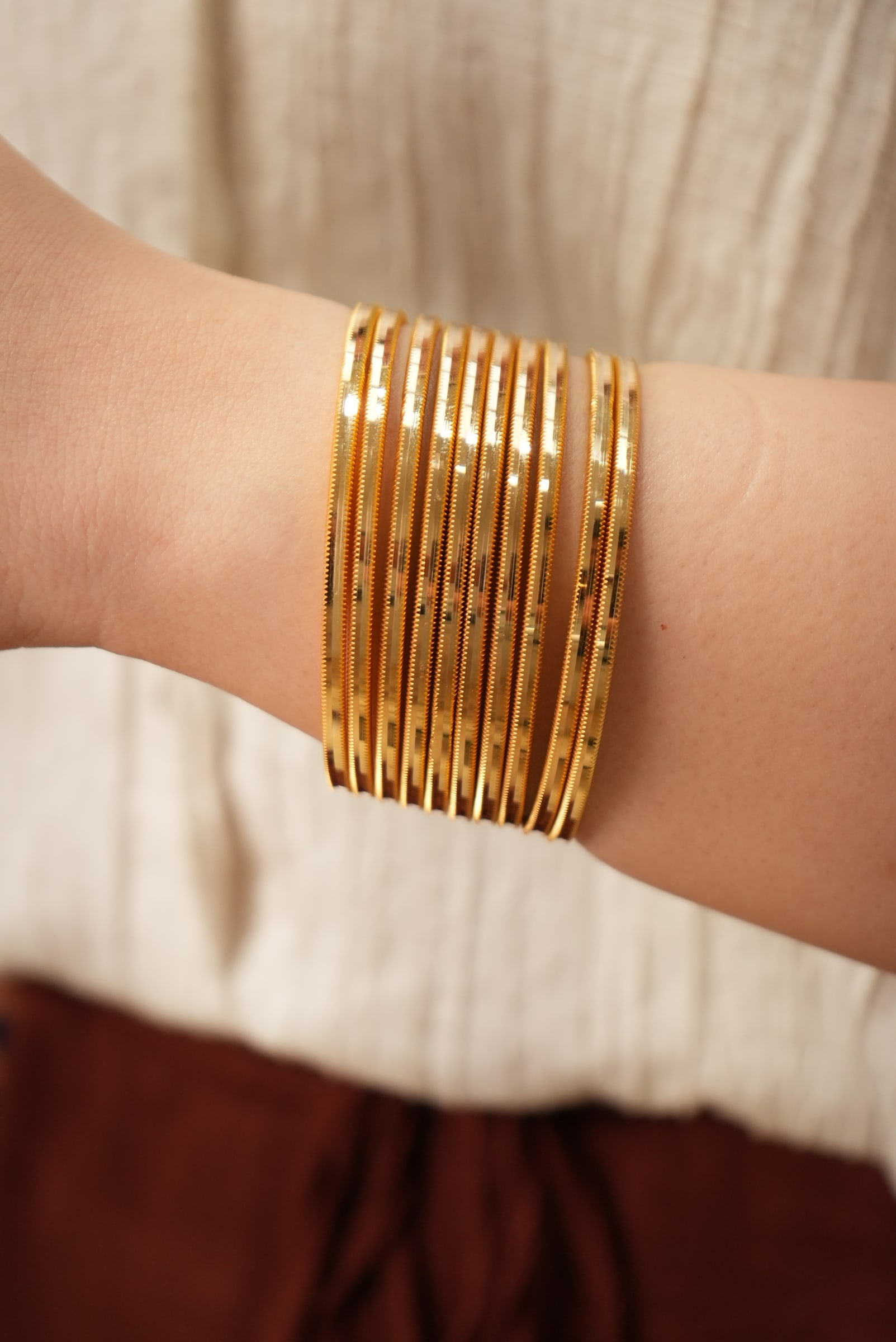
Two bracelets in the same window can look nearly identical while one is both softer and more expensive. The difference is the karat: how much of the piece is actually gold. Most Dutch shop windows are 14K; anyone who grew up with Turkish or Middle Eastern jewellery will know 22K far better. Both are real gold. They are simply built for different jobs.
What karat actually measures
Pure gold is 24K and too soft for jewellery; you can mark it with a fingernail. So gold is alloyed with metals such as copper, silver and zinc to give it strength. The karat number tells you how much of that mixture is gold.
- 14K = 585 parts per thousand gold, or 58.5%
- 18K = 750 parts per thousand gold, or 75%
- 22K = 916 parts per thousand gold, or 91.6%
You will find that three-digit number on the piece itself, usually near the clasp or on an inner surface. The 585, 750 or 916 stamp *is* the purity; it does not need a separate certificate.
In the Netherlands, 14K is the legal floor
This catches many newcomers out. In the Netherlands an item may only be sold as gold if it is at least 585/1000, which is 14 karat. Anything below that cannot legally be called gold here.
On top of that, gold jewellery weighing 1 gram or more must carry a hallmark. This is set out in the Dutch Hallmarking Act and verified by an independent assay office, so a stamped piece demonstrably contains the purity marked on it rather than the purity the seller claims.
The practical takeaway: 14K is not "lesser" gold in this market. It is the legal standard, and it is independently checked.
Which survives daily wear?
The higher the gold content, the softer the metal. A 22K bracelet picks up scratches sooner and deforms more easily if you knock it. 14K is noticeably harder thanks to the alloy.
So how you wear a piece matters more than the karat number on its own:
- Pieces you never take off (wedding bands, everyday rings, a bracelet you always wear) last noticeably longer in 14K.
- Occasion pieces and traditional sets look right in 22K and wear less, simply because they take fewer knocks.
- Children's jewellery and gift bracelets are usually chosen in 14K, which copes better with daily life.
Is the colour difference real?
Yes, and side by side you will see it immediately. 22K has a deeper, warmer yellow because there is more pure gold in it. 14K reads lighter and cooler. Neither polishing nor plating removes that difference: it is the metal's own colour.
White and rose gold follow the same logic. 14K white gold also contains 585 parts per thousand gold; the alloying metals simply change the colour.
Value, price per gram and trade-in
Gold value is calculated on the amount of pure gold per gram. At equal weight, a 22K piece contains more pure gold than a 14K one and costs accordingly more.
If you are buying partly as a store of value, that matters. Bear in mind, though, that a piece's price is not only gold: craftsmanship, design and any stones all count. On an intricate piece, the gold value can be a small share of the total.
When trading in or selling, the hallmark is what settles it. The purity of a stamped piece is not open to debate, which makes the transaction faster.
So which should you buy?
There is no single right answer, but three questions usually settle it:
- Will you wear this every day, or on occasions?
- Does durability matter more, or gold value?
- Do you want a traditional look, or a more modern, lighter yellow?
Everyday wear, durability first and a modern tone points to 14K. An occasion piece where gold value and a traditional look come first points to 22K.
Judge it in your hand, not on a screen
Gold colour never translates to a screen. Phone cameras and shop lighting both shift the tone. Seeing the two purities side by side, in daylight and against your own skin, tells you more than any article can.
At our shop on Javastraat in Amsterdam East you can put 14K and 22K next to each other and feel the difference in weight and hallmark yourself. Tell us how you plan to wear the piece and we will work out which one fits.